Cerebras CEO Envisions Home‑AI Appliances Running Partly Local, Partly Cloud
Cerebras founder Andrew Feldman says personal AI assistants will soon be as common as household appliances, blending edge and cloud to manage finances and schedules.
 BuildPreview AI Desk
5 min read
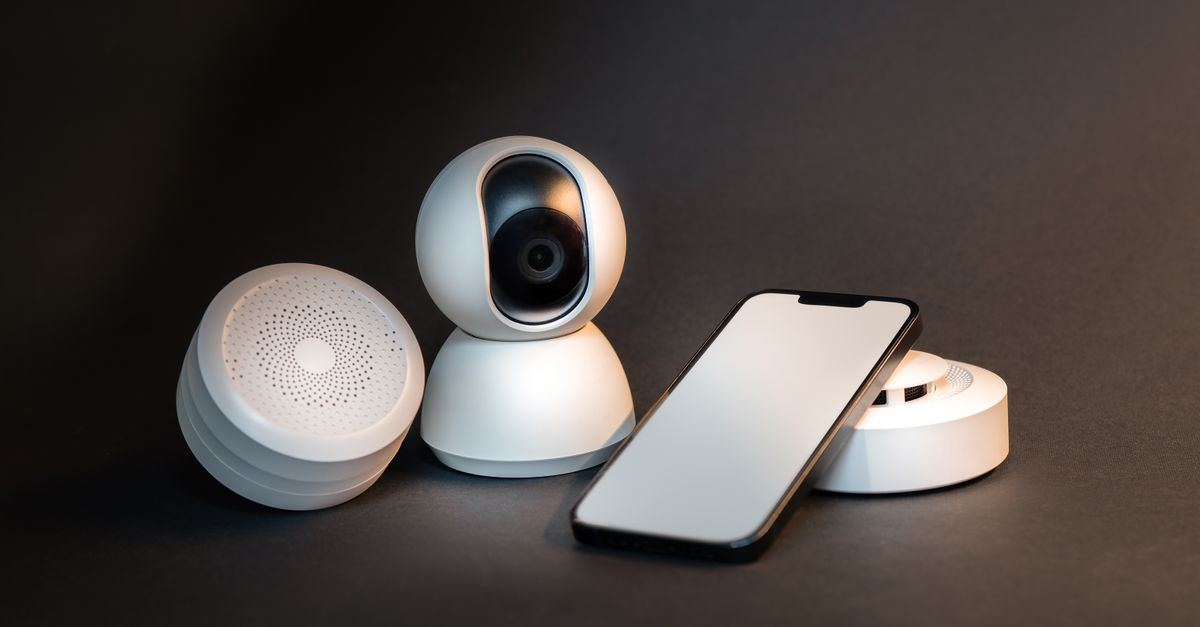
During TechCrunch Disrupt 2026, Cerebras Systems co‑founder Andrew Feldman outlined a near‑future scenario in which every home hosts an AI appliance that blends edge computing with cloud services. He said the devices would operate like smartphones, performing tasks locally and offloading heavier workloads to the cloud, while maintaining a security perimeter and handling payments. The report quotes CEO Andrew Feldman saying "Just like your cell phone, they’ll do some work on device and some work going back to the cloud,".
Key points
- Cerebras CEO predicts personal AI assistants will become commonplace in homes, blending local and cloud processing.
- Devices will handle credit card transactions and manage calendars, offering deep personal context.
- Feldman cites Meta’s Muse and Instinct as examples of consumer AI agents gaining traction.
- Cerebras focuses on AI chip infrastructure, not consumer‑facing products, to enable third‑party innovation.
What happened
On Tuesday at TechCrunch Disrupt 2026, Feldman answered a question about what would need to happen for AI to become a home appliance. He replied, "Actually, I don’t think that’s very far away," and pointed to Meta’s Muse and Instinct, the startup now valued at $10 billion, as evidence that agentic technology is finding footing with everyday users. Feldman described a future in which personal assistants run partly on a local device and partly in the cloud, similar to a smartphone, with a security perimeter around them and the ability to access credit cards for purchases. He emphasized that the assistants would understand users deeply and provide meaningful life improvements.
He also shared how he uses a collection of agents to sweep his calendar, pull up information about people he will call, and perform other routine tasks. Feldman said he is excited about the new possibilities that were not possible before, though he leaves it to other founders to figure out what those might be. "One of the reasons I love being in infrastructure is because I don’t need the consumer‑facing idea … I like building the platforms that other people’s ideas take flight on," he added.
The backstory
The vision of a home‑AI appliance follows a decade of progress in chip design, edge computing, and conversational agents. Early smart speakers like Amazon Echo and Google Home relied on cloud‑only processing, but privacy concerns and latency limits drove a shift toward hybrid models. Meta’s recent launch of Muse and Instinct, both priced for mass adoption and backed by a $10 billion valuation, signals that consumers are ready for more sophisticated agents that can act autonomously. Cerebras, founded on the premise of massively parallel AI hardware, has been delivering GPUs that accelerate large language models, making it a natural partner for the next generation of edge‑aware assistants.
Drivers and trade‑offs
The primary driver for local‑cloud hybrids is latency. By running inference on a device, assistants can respond to voice queries in milliseconds, while heavier tasks—like policy updates or large‑scale data analysis—are handled in the cloud. This split also mitigates bandwidth costs and reduces exposure to network outages. However, local hardware must be powerful enough to support the models, raising concerns about energy consumption and heat dissipation. Cerebras’s silicon, designed for massive parallelism, could provide the computational density needed, but integrating it into consumer‑grade form factors will require new packaging and cooling solutions.
Security is another trade‑off. Feldman highlighted the need for a perimeter around the assistant, especially since it will have access to credit cards. Local execution can keep sensitive data on the device, but the cloud component must be encrypted and audited. Companies that can certify end‑to‑end security will likely gain consumer trust, while those that fail to do so risk regulatory scrutiny.
Second‑order impacts
If home‑AI appliances become ubiquitous, the software ecosystem will shift toward modular agent stacks. Developers will need to build agents that can run both on edge hardware and in the cloud, requiring new SDKs and interoperability standards. The hardware market may see a boom in specialized AI chips for home use, similar to how GPUs surged in gaming. At the same time, the demand for high‑bandwidth, low‑latency connectivity will increase, prompting telecom providers to expand edge data centers closer to consumers.
Consumers will experience a new level of personalization. With assistants that understand context deeply, tasks like scheduling, budgeting, and even health monitoring could be automated. Yet this raises privacy questions: who owns the data collected by these devices, and how is it protected? Businesses that can navigate the legal and ethical landscape will win early adopters.
What builders and businesses should do
- Design AI models that can partition workloads between a local accelerator and a cloud backend.
- Implement robust encryption and secure boot mechanisms to protect user data on the device.
- Build modular agent frameworks that allow third‑party developers to plug in new capabilities.
- Provide clear privacy disclosures and user controls for data that crosses the device‑cloud boundary.
- Explore partnerships with telecoms or edge‑compute providers to reduce latency for cloud‑dependent tasks.
- Validate cost‑per‑user models to ensure that the added hardware does not erode consumer willingness to pay.
- Monitor regulatory developments around payment processing and personal data in the home.
The bottom line
Cerebras’s vision places it at the center of a shift toward hybrid AI appliances that combine local power with cloud intelligence. The next few years will reveal whether the industry can deliver secure, energy‑efficient hardware that meets consumer expectations for privacy and performance. Watch for early adopters who launch affordable, plug‑and‑play home assistants, and keep an eye on how the supply chain adapts to meet the demand for specialized AI chips.